


Guitar
Amps – Page 25


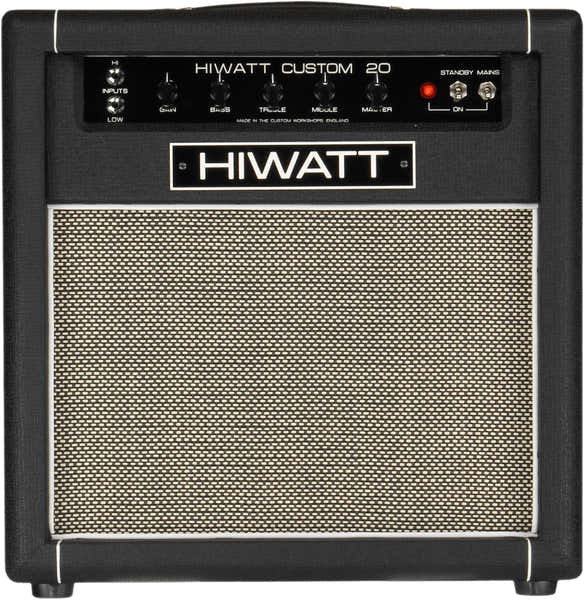
Hiwatt
Super Hi 33W
Hiwatt
Custom 20
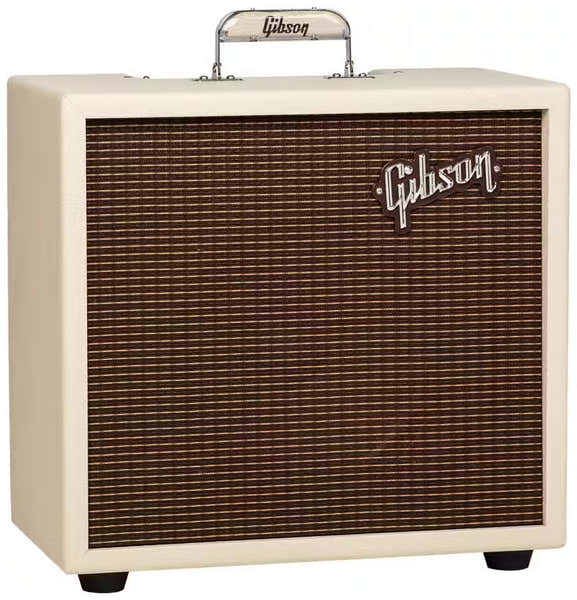
Gibson Amplifiers
FALCON 5 1X10

Hiwatt
SF112 1967 - 1x12" 75w

Hiwatt
Tube Combo P18C

Eminence
CANNABIS REX

Hiwatt
Studio-Stage 20/40 1X12

Ashdown
Peacemaker 80w

Ashdown
Tête Peacemaker 20 watts made in UK

PRS
HDRX 1X12 CLOSED BACK

Radial
Cablink

Ashdown
Peacemaker cabinet 2 x 12" Celestion Creamback

Marshall
1960BX

Ashdown
SX 5 W - B Stock

Radial
JDX REACTOR GUITAR AMP DI BOX

Marshall
1936

Marshall
AMP GUITAR LAMP VINTAGE HEAD 100 WATTS JCM900

Hiwatt
SE212F-F75 - 2x12 150w Guitar Cabinet

Eminence
Alpha 3-32 American Standard

Eminence
Patriot Guit-Fiddle 12" Lead / Rhythm Guitar

Hiwatt
Cab Hg412

Hiwatt
SE212-115F - 2x12" F75 + 1x15" Sovereign 400

Hiwatt
Cab Starfinder 4X12"

Marshall
1960TV

Eminence
BP102-4

Hiwatt
Super Leeds 300W
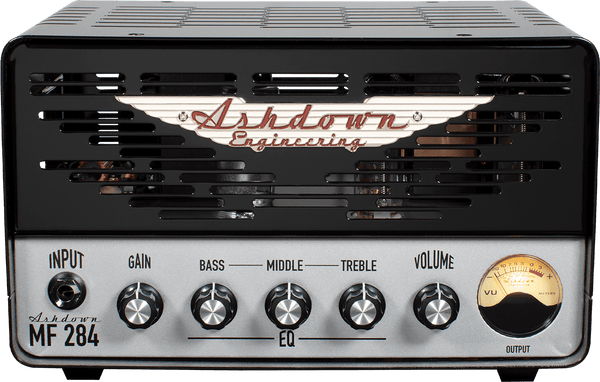
Ashdown
MF-284-H 15W TUBE HEAD

Ashdown
MF 484 2.N WITH TORPEDO

Ashdown
SX 2X12" Celestion Seventy 80 Closed Back Straight

Eminence
LEGEND 1058

Hiwatt
Super Hi 50W

Ashdown
Cabinet SX 4X12" Celestion Seventy 80 Closed Back Straight

Marshall
JVMC212 STRAIGHT 150 W 2X12"

Positive Grid
Spark 2 Bundle
Which guitar amp should you choose as a beginner?

Choosing your first amp isn't rocket science: a combo amp (the amp and speaker in the same cabinet), a few watts if you're playing at home, and you've got the essentials. Of course, when you play with a drummer you'll need more output power, but it mainly depends on your plans, and there's nothing to stop you starting small (more on that below). In short, as long as you're playing in your bedroom, you're better off with a small combo amp that sounds good at low volume than a big amp you'll never dare turn up.
Among practice guitar combos, many use modelling, which means a digital circuit (a little computer, essentially) imitates the tone of several well-known amps. They generally also have built-in effects, a tuner, a headphone socket, sometimes a USB port to record yourself, and so on, enough to keep you busy for quite a while without buying anything else! Our biggest sellers are the Spark range from Positive Grid, followed by our simpler little Woodbrass combo amps and the Katana models from Boss.
Valves, transistors or modelling: how do you make sense of it all?

Many guitarists will tell you there's something more ‘alive’ about a valve, while others prefer the clarity of a transistor; it's mostly a matter of what sounds right to you. A valve amp that covers every style, from jazz to metal, is harder to find, though. If you fancy trying everything, look instead at modelling guitar amps, which switch between clean tone and heavy distortion at the press of a button, or from your phone on most models.
In valve guitar amps, it's the valves (the famous tubes) that amplify the signal, and the tone responds to the slightest nuance in your playing. They're a little heavier and more fragile, and their valves wear out and need replacing from time to time, but many guitarists won't hear of using anything else, especially for blues and rock. Transistors, on the other hand, need virtually no maintenance and keep the same tone at low and high volume alike, which explains their reputation for clean tones. And in between, there are hybrid amps, with a valve in the preamp and transistors providing the output power.
Which amp should you choose for playing in a flat?

For a flat, small modelling amps are the option pretty much everyone agrees on (they sound good even at very low volume, and you can switch to headphones when it gets late). On the valve side, there are models rated at 1 to 5 watts and others where the output power is adjustable, from 15 watts to 1 watt, for example. Be careful, though: at the same output power, valve amps are much louder than solid-state amps: 15 watts of valve output power is already a lot at home! And more than the watts, it's how the volume adjusts that matters. With a gain control separate from the volume control (the ‘master volume’), you keep your distortion at low volume; if, on the other hand, the amp needs to be pushed to sound good, you'll have to turn it up to a volume that's hard to live with in a flat.
If you already have a valve amp that's too loud at home, there's a solution: power attenuators and impulse responses (IRs) (Two Notes, Universal Audio or Boss offer them). You connect them between the head and the speaker cabinet, they absorb some of the output power, and some even let you play through headphones or record yourself, which is very handy! For truly silent playing, there are also headphone guitar amps, which plug straight into your guitar (the amPlug models from Vox, the Katana Go from Boss or the Mustang Micro Plus from Fender). Just one piece of advice: don't go overboard with the volume, it's much harder to judge through headphones!
Which amp should you choose for band rehearsals and playing on stage?

Rehearsing with other musicians is a different story: with a drum kit next to you, your little bedroom amp won't keep up. You'll need roughly twenty or thirty watts from a valve amp, considerably more from a solid-state amp (often around a hundred). To be honest, there isn't really a perfect amp for both home and rehearsal: an amp built to keep up with a drummer will seem huge in the living room, the little bedroom combo amp will soon be drowned out at rehearsal, and that's why you see so many guitarists with two amps. A reasonably beefy combo amp does the job nicely, and has the advantage that you can carry it in one piece. Those who often play on stage generally end up switching to a guitar amp head and a guitar speaker cabinet: you choose your speaker cabinet (1x12, 2x12 or 4x12, depending on the number of speakers) and can change it while keeping the same head. A 4x12 looks imposing, but it's best to have two people to carry it (and room in the car). As for connections, the speaker cabinet's impedance (4, 8 or 16 ohms) must match the head's, and you must never switch on a valve head without a speaker cabinet connected, or you risk damaging it.
For brands, here are a few pointers: Fender, whose clean tones have plenty of fans, Marshall for British crunch (Vox, Orange and Hiwatt have their loyal followers too), and for metal, heads from Engl, EVH or Revv. Guitarists already well equipped with effects pedals can also look at guitar preamp pedals, which fit onto a pedalboard. To finish, a few accessories you don't always think of: a footswitch to change channels with your foot (it isn't necessarily included with the amp), an amp cover for transport and, for a valve amp, replacement valves from JJ or Groove Tubes. These are changed in matched valve sets, and the power valves sometimes require an adjustment afterwards, so it's best to go to an amp technician. Guitar speakers from Celestion or Eminence, meanwhile, let you make a substantial change to a combo amp's tone. Finally, if you play a steel-string acoustic guitar or an electro-acoustic classical guitar, bear in mind that there are dedicated acoustic guitar combos, better suited to an undistorted guitar tone than an electric guitar amp.
Buying your guitar amp from Woodbrass
There's no substitute for a try-out with an amp, preferably using a guitar similar to yours. That's why the Woodbrass guitar shop at 182 avenue Jean Jaurès in the 19th arrondissement of Paris has set up two demo rooms: you can take your time comparing several amps, and at a volume you'd never allow yourself at home (the shop is open Tuesday to Saturday, from 10.30am to 7pm). If you park at Vinci Park Cité de la Musique, Woodbrass reimburses the first hour's parking as long as you make an in-store purchase (you then take the amp away with you the same day).
Too far from Paris? You can reach the team of sales advisers by phone, chat or email, Monday to Saturday until 6pm (from 9am on weekdays and 10am on Saturdays), for help choosing between valves and modelling, checking that a head and speaker cabinet are a good match or finding the output power that suits your needs.
If an amp disappoints you, you can return it up to 30 days after delivery. As for delivery times, an order placed before 12.30pm for an amp in stock online is prepared and dispatched the same day. If you want to spend less, also take a look at refurbished gear (checked, with a 3-year warranty) and B-Stock (tested, with a 6-month warranty), where you'll currently find practice guitar combos, including our Woodbrass models. And payment by instalments with Alma is still an option, handy when you're buying a head and its speaker cabinet.